Professional Roofing Technology
  • Commercial
    • Inspections
    • Roof Installations
      • Replacements
      • New Construction
    • Roof Maintenance
      • Roof Repairs
      • Decking Replacement
      • Restoration
    • Roof Systems
      • TPO
      • TPO Retro-Fit
      • PVC
      • EPDM
      • Modified Bitumen
  • Residential
  • Metal Fabrication
  • Industries
    • Warehousing
    • Manufacturing
    • Industrial
    • Automotive
    • Churches
    • Event Center
    • Cold Storage
    • Hospitals
  • About
    • Leadership Team
    • Partners
    • Careers
    • Areas We Serve
      • Florida
      • Georgia
      • Atlanta
      • North Carolina
      • South Carolina
      • Virginia
      • Alabama
      • Tennessee
  • Blog
  • Contact
  • FAQ
  • (470) 545 2541
  • Menu Menu

What Common Roof Problems Mean for Your Business

Commercial roofs endure constant exposure to sun, rain, wind, and daily wear—conditions that can lead to gradual damage you might not notice until it’s too late. Most roofing problems start small and become much worse if left unchecked. That’s where regular inspections come in. Trained professionals know exactly what to look for and how to spot issues before they become major failures.

Continue reading to explore the most common roof problems found during inspections, what they mean, and why timely repairs are essential for protecting your building and your bottom line.

Spotting Trouble Early

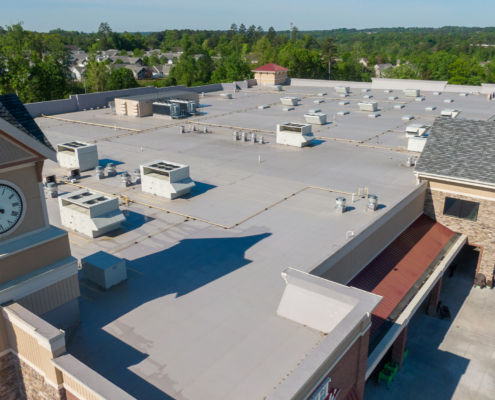
Even if a commercial roof appears fine from the ground, common roof problems could be developing that aren’t visible without a closer inspection. Professionals use a detailed checklist to examine the surface and underlying components, identifying signs of wear and damage that building owners may overlook.

Let’s take a look at the most frequent problems found during inspections and what they mean for your building.

What Water Damage Reveals About Your Roof

Water intrusion is not only the most frequent problem seen in commercial roofing systems—it’s also among the most damaging. A tiny puncture in the membrane or a poorly sealed penetration point can let in enough water to cause significant harm over time. Once inside, moisture can saturate insulation, deteriorate decking materials, and create the perfect conditions for mold and mildew to thrive.

  • Causes: Cracked membranes, deteriorated flashing, blocked drainage, poor sealing, or storm impact.
  • Signs to watch: Discolored ceiling tiles, moldy smells, peeling paint, and visible water spots.
  • Why it matters: Leaks cause more than common roof problems—they can also lead to insulation failure, deck rot, and mold growth. Addressing leaks early can help avoid structural damage and costly remediation work.

Standing Water

Ponding occurs when water lingers on a flat roof for more than 48 hours without draining. While a few puddles might seem harmless, persistent standing water is often a sign of poor roof slope, sagging sections, or clogged drainage systems, all of which need to be addressed immediately.

  • Causes: Clogged gutters, insufficient slope, settling of roof materials, or neglected maintenance.
  • Signs to watch: Persistent puddles, algae or plant growth, and visible depressions on the roof.
  • Why it matters: Water left in the pool can degrade the membrane, add structural stress, and increase the risk of leaks and even collapse under severe conditions.

Cracks and Holes

Cracks and punctures may sound minor, but they can quickly become entry points for moisture, pests, and even outside air. These issues are especially common in high-traffic areas where HVAC units or other rooftop equipment require regular servicing.

  • Causes: Heavy equipment installation, rooftop traffic, falling branches, or storm impact.
  • Signs to watch: Tears in the membrane, exposed insulation, or soft spots underfoot.
  • Why it matters: Water entering through a small opening can spread, damaging insulation and interior components. Over time, a small puncture can lead to widespread degradation.

Failing Flashing

Flashing is a thin metal material installed around roof edges, vents, chimneys, skylights, and other penetrations to prevent water from seeping in. Over time, flashing can break down, rust, or pull away from the roofing material, especially if the roof experiences frequent movement from wind or temperature swings.

  • Causes: Thermal expansion and contraction, corrosion, improper installation, or wind damage.
  • Signs to watch: Loose or lifted flashing, rust stains, and gaps along seams or edges.
  • Why it matters: Damaged flashing allows water to seep in, often unnoticed, until it causes internal issues. It can also reduce energy efficiency by allowing air leaks.

Membrane Shrinkage and Blisters

Commercial roofs that use single-ply membranes (like TPO or EPDM) are popular in commercial roofing for their flexibility and efficiency. However, as they age, they can develop blisters or shrink, especially in climates with intense sun exposure.

  • Causes: Prolonged UV exposure, trapped moisture, and physical stress from movement or weather.
  • Signs to watch: Wrinkled surfaces, pulled-back seams, raised bubbles, or soft areas.
  • Why it matters: Shrinking membranes can pull away from edges and seams, making them more prone to leaks. Blisters frequently trap water or air, leaving the roof exposed to further damage when they pop.

Address common roof problems before they worsen with inspections from Professional Roofing Technology!

Our Roof Inspections

Why Prompt Repairs Save You More in the Long Run

Waiting to repair a minor roofing issue often leads to more complex and expensive problems. Many building owners put off small repairs, not realizing how quickly things can worsen.

Delaying repairs can lead to:

  • Water infiltration that ruins insulation and corrodes decking
  • Structural deterioration from trapped moisture
  • More expensive repairs due to wider damage
  • Increased heating and cooling costs from energy loss
  • Disruptions to operations due to leaks or safety concerns

Proactive maintenance helps extend the life of your roof and protects your building investment.

Signs of Roof Damage Experts Look For

Inspections by experienced professionals involve a detailed checklist to evaluate all critical commercial roof damage. Roof inspection checklists typically include:

  • Roof surface and membrane condition
  • The integrity of flashing and edge details
  • Functionality of drains, gutters, and scuppers
  • Seals around rooftop equipment
  • Evidence of moisture, staining, or mold
  • Visible structural movement or sagging
  • Signs of damage on the building’s interior

Some inspections also include infrared scans to detect hidden moisture beneath the membrane. These non-invasive scans are especially helpful for locating common roof problems before they become visible or costly.

Timing Your Roof Inspections Right

Industry best practices recommend scheduling roof inspections twice annually—typically in spring and fall—plus additional inspections after major storms. You should also contact a professional if you notice common roof problems like ponding water, cracks, or unexplained leaks.

Even well-intentioned maintenance teams can miss subtle damage. Hiring trained professionals ensures a thorough assessment with recommendations tailored to your roof’s condition.

Partner With Professional Roofing Technology to Prevent Commercial Roof Damage

At Professional Roofing Technology, we specialize in identifying and addressing common roof problems before they become emergencies. Our inspections are thorough, our team is experienced, and we use advanced tools like infrared moisture scanning to ensure nothing goes unnoticed. Contact us today to discover how our commercial roofing services can protect and restore your roof.

Share This Post

  • Share on Facebook
  • Share on X
  • Share on WhatsApp
  • Share on Pinterest
  • Share on LinkedIn
  • Share on Tumblr
  • Share on Vk
  • Share on Reddit
  • Share by Mail

More Like This

How To Read A Commercial Roof Inspection Report

How to Read a Commercial Roof Inspection Report (And What to Do Next)

Roof Inspections
https://www.prorooftechnology.com/wp-content/uploads/2026/05/How-to-Read-a-Commercial-Roof-Inspection-Report.jpg 1250 2000 Abstrakt Marketing /wp-content/uploads/2024/08/logo-removebg-preview-5a38d212-2.png Abstrakt Marketing2026-05-12 15:06:512026-05-12 15:08:00How to Read a Commercial Roof Inspection Report (And What to Do Next)
What To Expect During A Commercial Roof Inspection In Atlanta

What to Expect During a Commercial Roof Inspection in Atlanta

Commercial Roofing, Roof Inspections
https://www.prorooftechnology.com/wp-content/uploads/2026/04/What-to-Expect-During-a-Commercial-Roof-Inspection-in-Atlanta.jpg 1250 2000 Abstrakt Marketing /wp-content/uploads/2024/08/logo-removebg-preview-5a38d212-2.png Abstrakt Marketing2026-04-29 10:13:392026-05-12 15:10:01What to Expect During a Commercial Roof Inspection in Atlanta
Hole on roof

Emergency Roof Repair: What to Do When Disaster Strikes Your Business

Roof Inspections
https://www.prorooftechnology.com/wp-content/uploads/2024/09/1618486557068510.jpg 1250 2000 Abstrakt Marketing /wp-content/uploads/2024/08/logo-removebg-preview-5a38d212-2.png Abstrakt Marketing2025-06-23 13:13:372026-05-08 09:57:33Emergency Roof Repair: What to Do When Disaster Strikes Your Business
Professional Inspecting Commercial Roof

Roof Inspection Frequency: A Seasonal Guide for Commercial Buildings

Roof Inspections
https://www.prorooftechnology.com/wp-content/uploads/2024/09/Professional-inspecting-commercial-roof.jpg 1250 2000 Abstrakt Marketing /wp-content/uploads/2024/08/logo-removebg-preview-5a38d212-2.png Abstrakt Marketing2025-05-01 16:10:332026-05-08 09:57:34Roof Inspection Frequency: A Seasonal Guide for Commercial Buildings
The Importance Of Regular Roof Inspections For Commercial Roofs

The Importance of Regular Roof Inspections for Commercial Roofs

Roof Inspections
https://www.prorooftechnology.com/wp-content/uploads/2025/04/The-Importance-of-Regular-Roof-Inspections-for-Commercial-Roofs.jpg 1250 2000 Abstrakt Marketing /wp-content/uploads/2024/08/logo-removebg-preview-5a38d212-2.png Abstrakt Marketing2025-04-30 09:27:582026-05-08 09:57:35The Importance of Regular Roof Inspections for Commercial Roofs
Side View Roof At Sunset Or Sunrise

How To Assess Storm Roof Damage

Roof Inspections
https://www.prorooftechnology.com/wp-content/uploads/2025/04/Side-view-roof-at-sunset-or-sunrise.jpg 1250 2000 Abstrakt Marketing /wp-content/uploads/2024/08/logo-removebg-preview-5a38d212-2.png Abstrakt Marketing2025-04-04 14:17:292026-05-08 09:57:36How To Assess Storm Roof Damage
Previous Previous Previous Next Next Next

Categories

  • Commercial Roof Installation Process
  • Commercial Roof Maintenance
  • Commercial Roof Repairs
  • Commercial Roof Replacement
  • Commercial Roofing
  • Commercial Roofing Materials and Installation
  • Decking Replacement
  • Emergency Roof Repair
  • New Commercial Roof Install
  • Roof Decking
  • Roof Inspections

About Us

Since 1998, Professional Roofing Technology has been a full-service commercial flat roofing expert, proudly serving businesses across the Southeast United States.

Stay Connected

Services

Roof Installation

Roof Maintenance

Roof Systems

Residential

Contact Us

6955 Buford HWY NE
Doraville, GA, 30340

(470) 545 2541

[email protected]

Website by Abstrakt Marketing Group ©
  • Sitemap
  • Privacy Policy
Link to: The Importance of Regular Roof Inspections for Commercial Roofs Link to: The Importance of Regular Roof Inspections for Commercial Roofs The Importance of Regular Roof Inspections for Commercial RoofsThe Importance Of Regular Roof Inspections For Commercial Roofs Link to: Roof Inspection Frequency: A Seasonal Guide for Commercial Buildings Link to: Roof Inspection Frequency: A Seasonal Guide for Commercial Buildings Professional Inspecting Commercial RoofRoof Inspection Frequency: A Seasonal Guide for Commercial Buildings
Scroll to top Scroll to top Scroll to top

This site uses cookies. By continuing to browse the site, you are agreeing to our use of cookies.

AcceptLearn more

Cookie and Privacy Settings


How we use cookies

We may request cookies to be set on your device. We use cookies to let us know when you visit our websites, how you interact with us, to enrich your user experience, and to customize your relationship with our website.

Click on the different category headings to find out more. You can also change some of your preferences. Note that blocking some types of cookies may impact your experience on our websites and the services we are able to offer.

Essential Website Cookies

These cookies are strictly necessary to provide you with services available through our website and to use some of its features.

Because these cookies are strictly necessary to deliver the website, refusing them will have impact how our site functions. You always can block or delete cookies by changing your browser settings and force blocking all cookies on this website. But this will always prompt you to accept/refuse cookies when revisiting our site.

We fully respect if you want to refuse cookies but to avoid asking you again and again kindly allow us to store a cookie for that. You are free to opt out any time or opt in for other cookies to get a better experience. If you refuse cookies we will remove all set cookies in our domain.

We provide you with a list of stored cookies on your computer in our domain so you can check what we stored. Due to security reasons we are not able to show or modify cookies from other domains. You can check these in your browser security settings.

Other external services

We also use different external services like Google Webfonts, Google Maps, and external Video providers. Since these providers may collect personal data like your IP address we allow you to block them here. Please be aware that this might heavily reduce the functionality and appearance of our site. Changes will take effect once you reload the page.

Google Webfont Settings:

Google Map Settings:

Google reCaptcha Settings:

Vimeo and Youtube video embeds:

Accept settingsHide notification only