
Professional Roofing Technology
  • Commercial
    • Inspections
    • Roof Installations
      • Replacements
      • New Construction
    • Roof Maintenance
      • Roof Repairs
      • Decking Replacement
      • Restoration
    • Roof Systems
      • TPO
      • TPO Retro-Fit
      • PVC
      • EPDM
      • Modified Bitumen
  • Residential
  • Metal Fabrication
  • Industries
    • Warehousing
    • Manufacturing
    • Industrial
    • Automotive
    • Churches
    • Event Center
    • Cold Storage
    • Hospitals
  • About
    • Leadership Team
    • Partners
    • Careers
    • Areas We Serve
      • Florida
      • Georgia
      • Atlanta
      • North Carolina
      • South Carolina
      • Virginia
      • Alabama
      • Tennessee
  • Blog
  • Contact
  • FAQ
  • (470) 545 2541
  • Menu Menu

Commercial Roof Installation vs. Roof-Over: How Atlanta Building Owners Should Decide

When a commercial roof starts showing its age, the choice isn’t just about cost. You’re deciding between a full commercial roof installation in Atlanta or a roof-over, and those paths lead to very different outcomes over the life of the building. Most building owners lean toward the roof-over because the initial price is lower. The problem is that a lower upfront cost doesn’t tell you whether the existing system can actually support another layer, and getting that wrong ends up costing more than the tear-off would have.
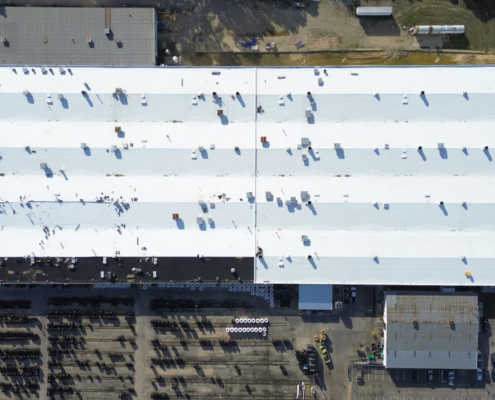
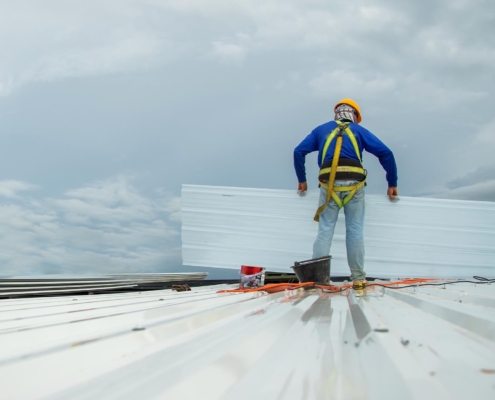
Understanding Commercial Roof-Overs

A commercial roof-over means installing a new membrane directly on top of the existing roof system without removing what’s already there. The old material stays in place, and the new layer gets adhered or mechanically fastened on top.

When a Roof-Over Can Work

There are situations where a commercial roof overlay in Atlanta is a reasonable choice. The existing system needs to be in solid shape: dry insulation, a structurally sound deck, and a membrane that’s still properly adhered without blistering or significant uplift. When those conditions hold, an overlay can extend service life without a major capital commitment right now.

Where the Risk Comes In

When those conditions don’t hold, a roof-over covers problems rather than resolving them. Wet insulation, failing adhesion, and deck deterioration don’t disappear when a new layer goes on top. They keep degrading beneath the new membrane, and whatever repairs you deferred show up again sooner than expected.

What a Full Commercial Roof Installation Actually Involves

A full tear-off removes the existing membrane and insulation down to the deck. Before anything new is installed, the deck gets inspected for structural damage.

Building From a Clean Foundation

This is what a complete commercial roof installation looks like when it’s done correctly: new insulation, new membrane, and everything installed to manufacturer specifications. It costs more upfront and takes longer, but it gives you a clean foundation with no hidden conditions underneath.

Full installations are also the only route that qualifies for a complete manufacturer warranty. Extended warranties through certified installers like Firestone (Elevate), GAF, and Versico require a full installation. That coverage isn’t available on overlays, and for any building owner thinking about long-term asset protection, it’s a significant factor.

When to Choose a Roof-Over vs. a Full Tear-Off

The condition of your existing roof determines the right path. A commercial roof overlay works for building owners whose existing system was properly installed, isn’t actively leaking, and has confirmed dry insulation throughout. It’s a practical choice when near-term budget limits are real and the underlying system can support another layer without compounding existing wear.

A commercial roof replacement is the right move when the existing roof has active leaks, wet or compressed insulation, deck damage, or has already had one overlay. Adding another layer in those conditions seals the problem in rather than resolving it.

The National Roofing Contractors Association identifies wet insulation as one of the primary causes of premature overlay failure. Moisture trapped beneath a new membrane keeps degrading the system from the inside, shortening the life of the new installation and adding to what you’ll eventually pay to address it.

Georgia follows the International Building Code, which generally limits commercial buildings to one roof overlay before a full tear-off is required. If your building has already had one overlay, the next project is a full installation regardless of budget preference.

Don’t Make This Call Without the Right Information

If you’re not sure whether your roof qualifies for an overlay or needs to come down to the deck, choosing based on the lower bid alone carries real risk. Pro Roof Technology has been assessing commercial roofs across Atlanta since 1998, and the team will evaluate your existing system, check for moisture in the insulation, and give you a straight answer on which direction actually fits your building and your budget.

Request a Roof Assessment

How Pro Roof Technology Handles Commercial Roof Installation in Atlanta

PRT doesn’t recommend a path before understanding what’s on the roof. The team evaluates the existing membrane for signs of uplift or blistering, probes for moisture in the insulation, and inspects the deck where access allows before recommending either direction.

Certified Master Installer Status

As certified master installers for Firestone (Elevate), GAF, and Versico, PRT qualifies to issue extended manufacturer warranties on full installations. That’s a distinction most roofing contractors can’t offer, and it’s one the team explains directly to every building owner before work begins.

In-House Crews on Every Project

PRT employs its own production crews and service group. There are no subcontractors on PRT jobs, which means the team controls quality from start to finish. Every project follows manufacturer specifications, whether it’s a roof-over or a complete tear-off and rebuild.

Frequently Asked Questions About Commercial Roof Installation in Atlanta

What is the main difference between a roof-over and a new commercial roof installation?

A roof-over installs a new membrane on top of the existing system without removing the old material. A full installation tears off everything down to the deck, inspects the substrate, and rebuilds from scratch. The key differences show up in warranty coverage, long-term performance, and whether problems already present in the existing system get addressed or buried.

Does Atlanta building code allow commercial roof overlays?

Georgia follows the International Building Code, which generally permits one overlay on commercial roofs before a full tear-off is required. If your building already has two existing roofing layers, a third typically isn’t allowed. A licensed contractor will pull the necessary permits and confirm what the code requires for your specific structure before any work begins.

Will a roof-over qualify for a full manufacturer warranty?

Major manufacturers like Firestone and GAF only issue their full extended warranties on complete installations, not overlays. A roof-over may include a workmanship warranty from the contractor, but it won’t carry the same long-term coverage that comes with a certified tear-off and reinstallation through a credentialed master installer.

How do I know if my existing roof is a candidate for an overlay?

The three factors that matter most are dry insulation, a structurally intact deck, and a membrane that’s properly adhered without blistering or significant damage. A professional inspection that includes moisture testing is the only reliable way to confirm those conditions before committing to an overlay.

How long will a roof-over last compared to a full commercial roof installation?

A full installation using quality materials installed to manufacturer specs can perform for 20 to 30 years or longer, depending on the system and maintenance history. A roof-over adds years to an existing system but doesn’t deliver the same service life since it builds on aging components rather than a clean substrate.

What factors affect the cost of commercial roof installation in Atlanta?

Roof size, material type, deck condition, and access requirements all affect pricing. Buildings with rooftop equipment, multiple penetrations, or operations that need to stay running during the project require additional coordination, which affects both timeline and total cost. PRT factors those conditions into every estimate before any work is quoted.

Does Pro Roof Technology serve commercial properties throughout the Atlanta area?

PRT works across the Atlanta metro and throughout the Southeast, including Georgia, Tennessee, South Carolina, North Carolina, and beyond. For a full look at where the team operates, visit the Atlanta and Southeast service areas page.

Make the Call That Fits Your Building

A roof-over and a full commercial roof installation aren’t the same investment, even when they look similar on a quote sheet. One adds a layer. The other rebuilds the system. The right answer depends on the condition of what’s already there, and the only way to know that with confidence is a professional assessment before anything is decided.

PRT has been helping Atlanta commercial building owners make this call since 1998. The team brings its own crews, its own equipment, and a straight answer about what the roof actually needs. Reach out today and you’ll hear back within 24 hours.

Share This Post

  • Share on Facebook
  • Share on X
  • Share on WhatsApp
  • Share on Pinterest
  • Share on LinkedIn
  • Share on Tumblr
  • Share on Vk
  • Share on Reddit
  • Share by Mail

More Like This

Top Down View Of Commercial Roof

Commercial Roof Installation Timelines: What Atlanta Property Managers Should Expect From Start to Finish

Commercial Roof Installation Process
https://www.prorooftechnology.com/wp-content/uploads/2026/06/Top-down-view-of-commercial-roof.jpg 1250 2000 Abstrakt Marketing /wp-content/uploads/2024/08/logo-removebg-preview-5a38d212-2.png Abstrakt Marketing2026-06-09 09:26:452026-06-09 09:26:48Commercial Roof Installation Timelines: What Atlanta Property Managers Should Expect From Start to Finish
Worker Installing Metal Roof Panels

A Step-by-Step Guide to Commercial Roof Installation

Commercial Roof Installation Process, Commercial Roofing
https://www.prorooftechnology.com/wp-content/uploads/2025/04/Worker-installing-metal-roof-panels.jpg 1250 2000 Abstrakt Marketing /wp-content/uploads/2024/08/logo-removebg-preview-5a38d212-2.png Abstrakt Marketing2025-04-04 17:33:382026-05-08 09:57:35A Step-by-Step Guide to Commercial Roof Installation

Categories

  • Commercial Roof Installation Process
  • Commercial Roof Maintenance
  • Commercial Roof Repairs
  • Commercial Roof Replacement
  • Commercial Roofing
  • Commercial Roofing Materials and Installation
  • Decking Replacement
  • Emergency Roof Repair
  • New Commercial Roof Install
  • Roof Decking
  • Roof Inspections

About Us

Since 1998, Professional Roofing Technology has been a full-service commercial flat roofing expert, proudly serving businesses across the Southeast United States.

Stay Connected

Services

Roof Installation

Roof Maintenance

Roof Systems

Residential

Contact Us

6955 Buford HWY NE
Doraville, GA, 30340

(470) 545 2541

[email protected]

Website by Abstrakt Marketing Group ©
  • Sitemap
  • Privacy Policy
Link to: Lightweight Concrete Roof Decking in Large Warehouses: Why Leaks Get Out of Control Fast Link to: Lightweight Concrete Roof Decking in Large Warehouses: Why Leaks Get Out of Control Fast Lightweight Concrete Roof Decking in Large Warehouses: Why Leaks Get Out of...Many Workers Doing Maintenance On Roof
Scroll to top Scroll to top Scroll to top

This site uses cookies. By continuing to browse the site, you are agreeing to our use of cookies.

AcceptLearn more

Cookie and Privacy Settings


How we use cookies

We may request cookies to be set on your device. We use cookies to let us know when you visit our websites, how you interact with us, to enrich your user experience, and to customize your relationship with our website.

Click on the different category headings to find out more. You can also change some of your preferences. Note that blocking some types of cookies may impact your experience on our websites and the services we are able to offer.

Essential Website Cookies

These cookies are strictly necessary to provide you with services available through our website and to use some of its features.

Because these cookies are strictly necessary to deliver the website, refusing them will have impact how our site functions. You always can block or delete cookies by changing your browser settings and force blocking all cookies on this website. But this will always prompt you to accept/refuse cookies when revisiting our site.

We fully respect if you want to refuse cookies but to avoid asking you again and again kindly allow us to store a cookie for that. You are free to opt out any time or opt in for other cookies to get a better experience. If you refuse cookies we will remove all set cookies in our domain.

We provide you with a list of stored cookies on your computer in our domain so you can check what we stored. Due to security reasons we are not able to show or modify cookies from other domains. You can check these in your browser security settings.

Other external services

We also use different external services like Google Webfonts, Google Maps, and external Video providers. Since these providers may collect personal data like your IP address we allow you to block them here. Please be aware that this might heavily reduce the functionality and appearance of our site. Changes will take effect once you reload the page.

Google Webfont Settings:

Google Map Settings:

Google reCaptcha Settings:

Vimeo and Youtube video embeds:

Accept settingsHide notification only